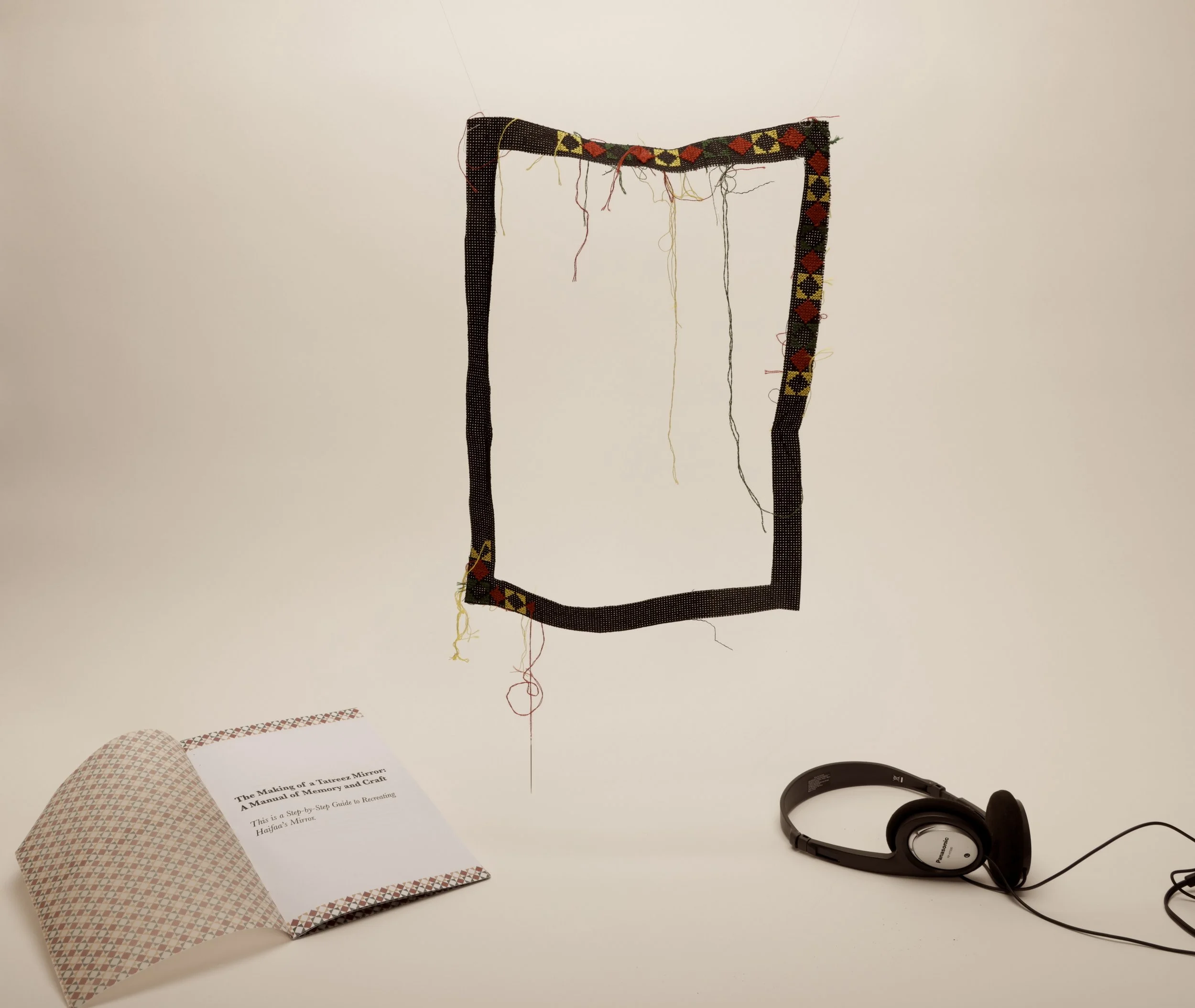
THREADS OF MEMORY
MAKING OF A TATREEZ MIRROR
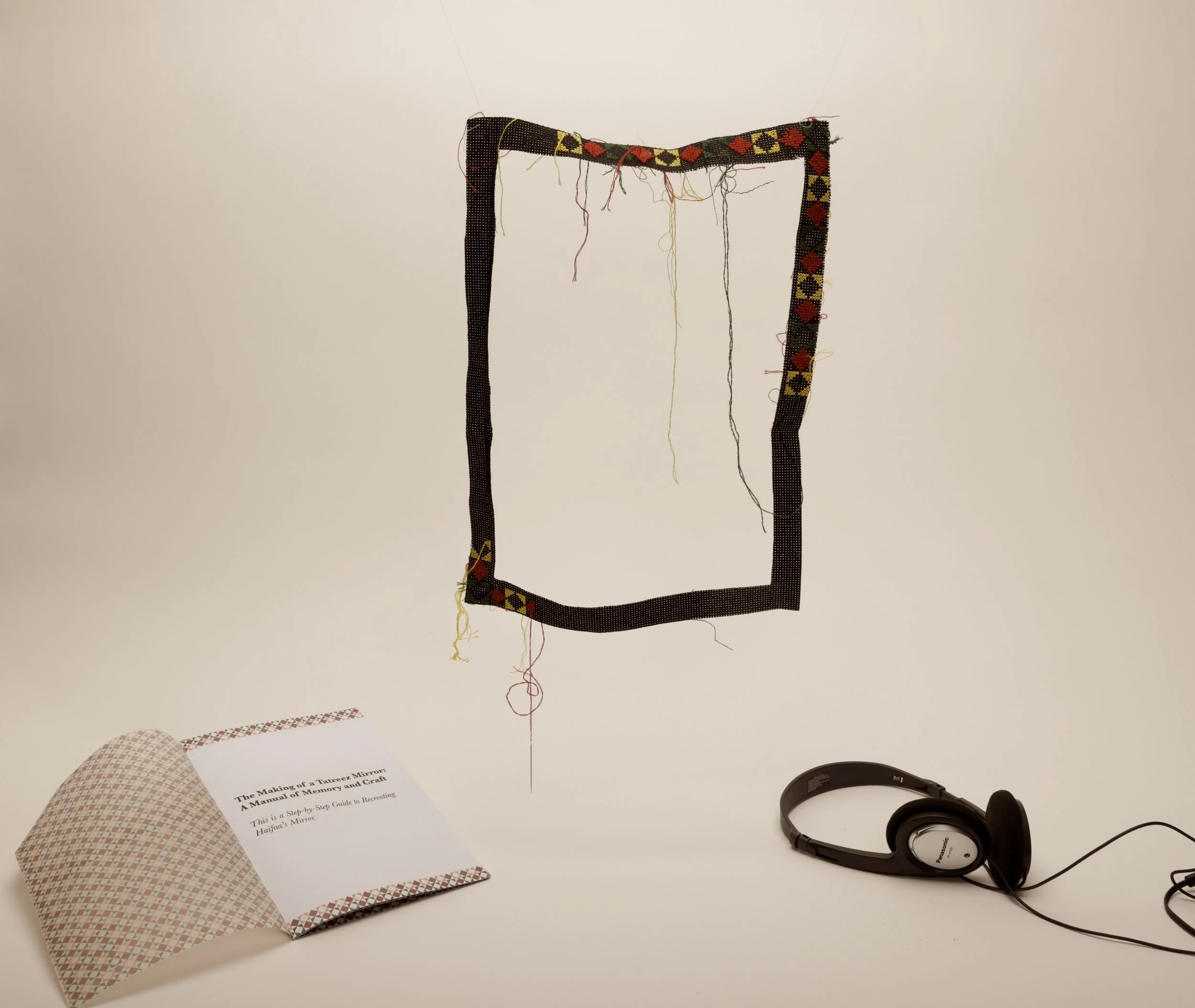
Publication

Exploring the deep connection between Palestinian craft and narrative, showing how oral history is woven into the act of making. By physically and memory-wise reconstructing Haifaa’s Gazan mirror, the project highlights the fragility of home amid war and displacement while affirming cultural resilience.
Tatreez, the centuries-old Palestinian embroidery, emerges as a language of belonging and resistance, where each stitch preserves stories and history. Haifaa’s mirror symbolises collective memory, illustrating craft as both archive and survival.
Central to the project is the idea that home exists through memory and tradition. The manual blends technical instructions with personal reflections, inviting others to engage in acts of remembrance and preservation. In a context of erasure and exile, it asks: What does it mean to rebuild, remember, and carry home?
The research emphasises direct engagement with those affected by displacement, prioritising sensitive, respectful conversations amid trauma. Interviews with Gazans now in Egypt focused on personal memories of home, cultural connections, and the sonic landscape of those spaces. Inspired by archives like the Shatila refugee camp sound collection, the project examines how sound, space, and narrative shape Palestinian identity and resilience.